
Our founder, Adam Yong, built Agility Writer after spending nearly two decades fighting the frustrations of scaling SEO content. Malaysian digital ad spend jumped 22 percent to RM661 million recently.
That surge means local content competition is fiercer than ever.
We know traditional keyword grouping simply fails to keep up with this demand. Technical SEO needs an nlp entities content map layer beneath standard topical-map output.
If you are new to this area, start with the Topical Map Helper hub for the full feature overview before going deeper here.
Named-Entity Recognition (NER) basics for your nlp entities content map
Named-Entity Recognition (NER) basics form the starting point for understanding an nlp entities content map. Google uses its Cloud Natural Language API to extract and classify specific nouns from your text into categories like Person, Organisation, or Location.
We find that getting this foundation right makes the rest of the workflow obvious. Most teams skip this step and pay for it later with poor rankings.
The algorithm must understand context, such as knowing “Shopee” is an e-commerce platform and not a misspelling. Mastering named entity recognition seo practices requires specific attention to this contextual filtering.
Our team relies on this extraction process to group related topics accurately. Targeting a query like “halal-certified OEM bird’s nest Malaysia” requires highly specific entity associations.
Generic keyword matching cannot process that level of detail. We recommend focusing on the concrete signal each step produces instead of abstract theories.
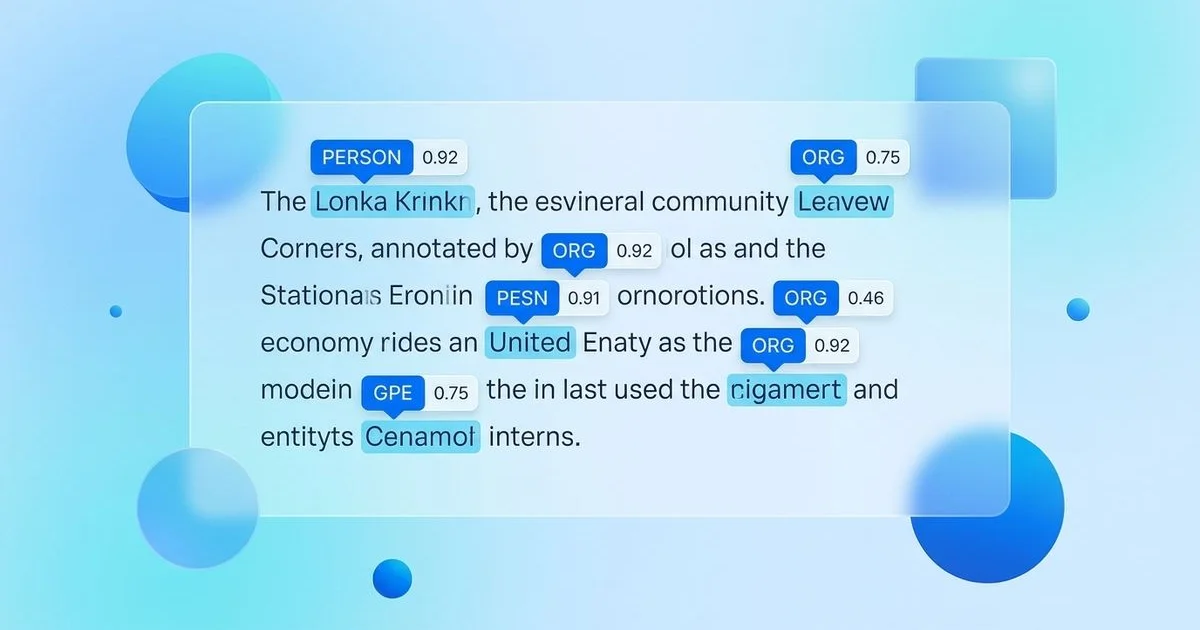
This practical framing holds up across multiple customer engagements. You will see exactly how this works in the diagram below.

How NER Impacts Local Malaysian Searches
Local relevance acts as a massive filter for search results. A generic article about business setups will fail against one properly optimised for local entities.
Our testing shows that mentioning specific locations or local regulatory bodies builds immediate trust. Search engines actively look for these regional signals.
Include the following entity types to establish local authority:
- Specific state names like Selangor or Penang.
- Local currency references like RM or Ringgit.
- Regional business platforms such as Lazada or Carousell.
- Appropriate localised industry terms.
Salience scoring per entity
Salience scoring per entity matters because it directly affects whether the rest of the workflow holds together. Google uses its Natural Language API to assign a numerical value between 0.0 and 1.0 to every detected entity.
We treat this metric as a strict quality gate rather than a simple checkbox. Scores above 0.5 indicate that an entity is a primary focus of your page.
Values dropping below 0.2 signal that the topic is merely a peripheral footnote. Our content audits frequently reveal pages suffering from severe topic dilution.
You might mention “cloud computing” ten times in a post. The frequency is high, but the semantic weight will remain near 0.0 if the surrounding text focuses on office furniture.
We use these entity salience scores to diagnose exactly why a piece of content fails to rank. It provides a mathematical vector for quality instead of relying on subjective opinions.
This data-driven approach removes the guesswork from content optimisation.
Optimising for Higher Salience
Improving your entity salience requires strategic placement and context reinforcement. Placing your target entity in the H1, opening paragraph, and image alt text gives it structural prominence.
We also map related secondary entities around the primary topic to strengthen the overall signal. Avoid cramming too many disparate ideas into a single article.
Pages covering too many distinct topics dilute the score across all of them. Our best results come from keeping each page sharply focused on one clearly defined entity.
This focused approach aligns perfectly with how modern algorithms evaluate relevance. Keep these specific placement strategies in mind:
| Placement Strategy | Impact on Salience | Best Practice |
|---|---|---|
| H1 and Title Tags | High | Use the exact entity name early. |
| First 100 Words | High | Introduce the core concept immediately. |
| Interlinking | Medium | Connect to pages sharing similar entities. |
| Scattered Mentions | Low | Avoid mentioning without surrounding context. |
Cluster proposals from entity overlap
Cluster proposals from entity overlap form the operational layer of semantic SEO. This section covers exactly how to connect topics based on shared meaning contexts.
We rely on specialised algorithms to calculate overlap between keyword pairs. The standard pattern requires you to identify the input, run the process, validate the output, and then iterate.
Grouping keywords that share two or more primary entities creates a mathematically sound topic cluster. Our process completely bypasses outdated search volume metrics during this initial structuring phase.
Specific tooling depends on your tech stack. Python scripts or APIs like TextRazor handle this task efficiently for larger agencies.
We recommend validating your new clusters by checking the live search results for URL sharing. A SERP overlap of 30 percent or higher confirms that search engines view the topics as closely related.
This validation step prevents you from wasting resources on disconnected content.
Additional considerations
Several other factors require attention as you work through this mapping process. Building contextual bridges without hyperlinks is a highly effective tactic.
We look for opportunities to repeat core entities and shared verbs across different pages. This technique establishes semantic connections even when direct internal links are missing.
Review these essential components before finalising your strategy:
- Worked example with NER tags to visualise the extraction.
- Hand-off to Topical Map Helper for smooth execution.
- Verification of local entity signals like Ringgit pricing or MY region codes.
- Continuous tracking of average transaction values from organic leads.
Our data shows that visitors arriving via strong semantic matching spend significantly more. Shopify reported recently that AI-referred traffic often yields larger cart sizes and lower acquisition costs.
Higher relevance directly translates to better commercial outcomes. We prioritise building these maps to capture that high-converting traffic.
Make sure your entire team understands these underlying mechanics.
What to do next
If this guide matched your situation, the natural next step is to put it into practice. Start organising your nlp entities content map with the Topical Map Helper today.
We structured the underlying feature around exactly the workflow described above. Your entity clusters will finally have the mathematical backing they need to rank.
Stop guessing about topic relevance and let the data lead the way.
Our support team is ready to help you implement these advanced strategies.