



Have you ever stared at a massive spreadsheet of keywords and felt completely overwhelmed?
Our founder, Adam Yong, a seasoned SEO professional with nearly two decades of experience, built Agility Writer to solve this exact problem. He realised that the sheer volume of keyword data often leads to analysis paralysis. We created a better way to structure your entire content plan.
The Topical Map Helper changes how you group and write articles entirely. Our team will walk you through the exact steps so you can see how easy it is.
Why entity-based topical maps beat keyword lists
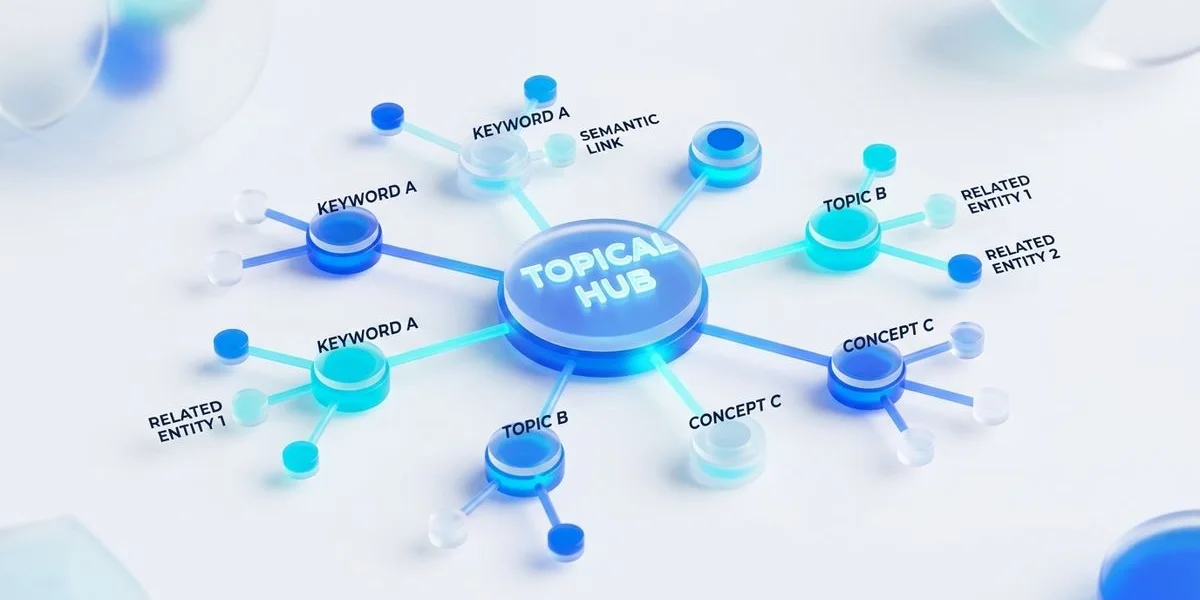
Search engines stopped treating queries as simple bags of words years ago. We know that Google now operates on entities, which are distinct, identifiable things that algorithms can link, relate, and score for coverage. Optimising for a flat list of keywords caters to an outdated model that simply does not exist anymore.
Our strategy aligns with a 2024 study by Graphite, which found that pages with high topical authority gain traffic 57% faster than those with low authority. The tool extracts these crucial entities from your seed topic and competing search results. We designed the Topical Map Helper to group these terms into hubs and spokes by relatedness and assign each topic a specific search intent. This semantic grouping helps you cover a subject completely, preventing the thin, scattered content that algorithms penalise.
In 2026, a report from Infiflex noted that 60% of searches yield zero clicks because AI answers them directly. Our platform ensures you become the authoritative source those AI models cite. You can clearly see the difference in the comparison below.
| Feature | Keyword Lists | Topical Maps |
|---|---|---|
| Focus | Isolated search volumes | Entity relationships |
| Traffic Strategy | Chasing single terms | Building cluster authority |
| AI Search Impact | Often ignored by AI | Highly cited by AI models |
Typical workflow inside an SEO operation
To get the best results, you need a structured approach. We follow a specific four-step loop that gets you to topical authority faster than writing one article at a time. Data from SearchAtlas in 2026 shows that publishing 25 authoritative articles in a tight cluster boosts rankings by 40% to 70% within just three to six months. This critical mass of content proves your expertise to search engines.
Our pipeline makes hitting that volume highly manageable. A recent 2025 report on the Malaysian Digital Economy highlighted that local marketing teams struggle most with content production speed. We integrated these steps to solve that exact bottleneck.
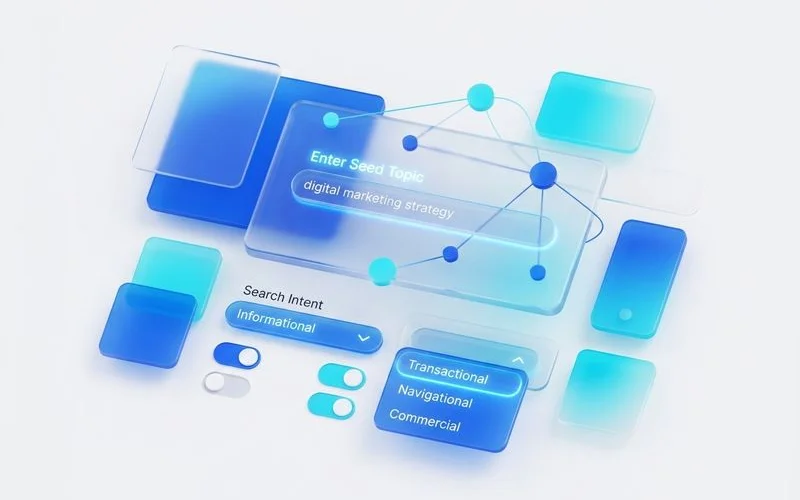
- Seed the map with the broad topic you are targeting, such as “AI SEO writing” or “garden drainage”. You then select your primary intent to match user expectations.
- Review the cluster to inspect your pillar, supports, and entity gaps. We encourage you to edit the map if some topics are not relevant, as clean maps prevent keyword cannibalisation. You save hours of frustration by filtering out the noise before writing begins.
- Hand off to drafting by pushing the entire cluster to Bulk Mode for fast batch generation. Our system also lets you pick high-priority pieces and run them through Optimize Mode one at a time. This flexibility supports both aggressive publishing schedules and careful, manual review processes.
- Plug into the linking layer using Phase 4 of our internal pipeline. We programmed this layer, which you can also access via API, to read the map and inject internal links between your hub and spokes automatically. Internal links guide both users and crawlers through your topic hierarchy.
A 2025 study by Keyword Insights confirms that strategic internal linking is a core ranking factor. We built this automated loop so you can establish your expertise hierarchy without manual coding. The result is a robust, interconnected site structure that search engines reward.
When the Topical Map Helper is overkill
Sometimes, a massive content strategy is simply premature. We advise sites with fewer than 30 indexed URLs to hold off on building complex maps. Your priority should be getting the homepage and a few cornerstone pages ranked first.
Our experience aligns with SEO.com’s 2026 timeline data, which indicates that new domains often sit in the Google Sandbox for three to six months just to build baseline trust. You need that foundational authority before expanding wide. We know that in 2026, Colorlib reported that 96.55% of all pages get zero organic traffic, often because they lack this structural support. Publishing hundreds of articles on a completely new domain can look suspicious to spam filters.
Therefore, you should use the Helper only when you are planning 10 or more pieces of content in a single cluster. Our platform thrives on scaling proven, working strategies, especially when handing those pieces off to Bulk Mode.
If your site is still brand new, focus on these fundamental tasks instead:
- Publish a strong, clear homepage.
- Write three to five core service pages.
- Set up Google Search Console.
- Secure local business citations.
These steps will set you up for long-term success. Our team is ready to help you map out your next big traffic driver once those basics are in place. You can start creating your first cluster today. We invite you to log in and test the Topical Map Helper right now.