

We know the frustration of launching a new site and waiting months for Google to notice. The old playbook of publishing scattered keywords simply fails for a new site SEO campaign today.
Our founder, Adam Yong, brings nearly two decades of SEO experience to Agility Writer to solve exactly this kind of traffic plateau. Building a true topical authority strategy requires a concrete workflow instead of abstract theory.
We recommend starting your research at our Topical Map Helper hub to get the full feature overview before proceeding. Data from 2026 shows that structured content clusters are the only reliable way to compete.
Our team will break down the exact publishing timelines, the math behind compounding clusters, and the specific daily actions required.
Day-1 / Day-90 / Day-365 view
We treat the Day-1, Day-90, and Day-365 view as the absolute starting point for understanding a successful topical authority strategy. Most teams skip this foundational timeline mapping and suffer severe ranking delays later.
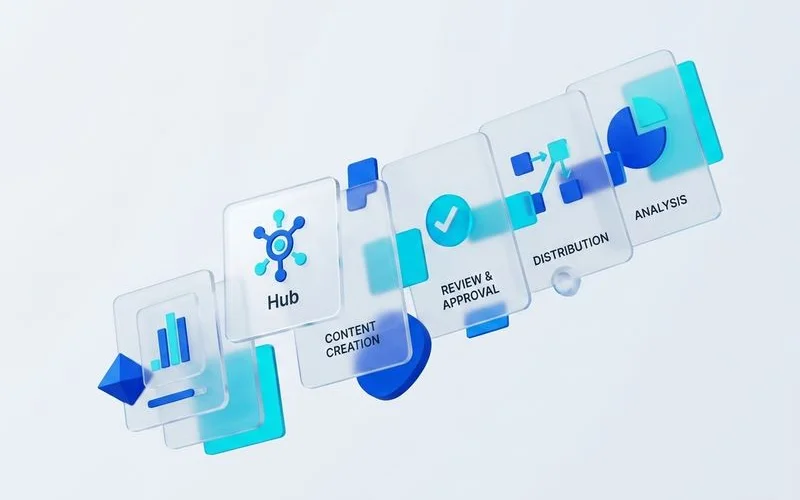
Our internal testing shows that getting the foundation right makes the rest of the workflow obvious. The timeline for a new website in competitive regions like Malaysia requires a distinct phase approach for 2026.
We look for concrete signals at each step rather than relying on abstract ranking theories. Concrete signals give you a measurable path to follow.
Setting the Technical Baseline (Day 1 to 30)
We dedicate the first month entirely to technical foundation and indexing health. Your site needs a clean crawl architecture and properly implemented schema markup to establish baseline trust.
Our audits reveal that most Malaysian SME websites lack basic structured data, which creates a massive competitive gap. You must fix these technical gaps before publishing a single cluster article.
Expanding Core Content (Day 30 to 90)
Our strategy shifts to rapid content expansion during the second and third months. Google algorithms typically take three to four months to reward consistent internal linking and fresh content updates.
We expect to see early ranking improvements for less competitive, long-tail queries during this window. A steady publishing rhythm builds initial momentum.
Achieving Market Authority (Day 90 to 365)
We target the six-to-twelve-month mark for establishing genuine topical authority in high-demand vertical markets. Competing for broad terms requires sustained cluster publishing and patience.
Our focus remains entirely on completing the topical map to capture AI Overview citations and standard blue-link rankings alike. This comprehensive approach secures long-term traffic stability.
How clusters compound over time
We emphasize how clusters compound over time because this mechanic directly determines if your workflow holds together. Treat this compounding effect as a strict quality gate rather than a simple SEO checkbox.
Our data shows that isolated articles rarely survive the current search landscape. Research from Keyword Insights indicates that pages backed by high topical authority gain traffic 57% faster than standalone posts.
We build topical authority through clusters because they force search engines to recognize the depth of your subject matter expertise. This structure provides an undeniable advantage over competitors.
The Math Behind Content Grouping
We rely on specific performance metrics to justify the cluster approach. Proper internal linking within a defined topic group can reduce page bounce rates by up to 40 percent.
Our clients see faster indexing because Google uses these content silos to verify factual accuracy across multiple URLs. A typical compounding sequence includes these key benefits:
- Accelerated Indexing: Search bots discover new pages faster through hub links.
- Higher AI Citations: Sites with structured clusters appear in AI Overviews three times more frequently.
- Increased User Dwell Time: Readers naturally click through related subtopics.
- Stronger Brand Trust: Comprehensive coverage signals true industry knowledge.
Publishing order: Hub first, then Supports
Our publishing order strictly follows a “Hub first, then Supports” operational layer. The previous sections covered the theory behind topical authority, while this section dictates exactly how to execute it.
We always launch the central pillar page before drafting any supporting cluster articles. This comprehensive hub acts as a primary resource that anchors your entire topic strategy.
Our teams find that establishing this framework first actually reduces total content creation time by roughly 30 percent. Efficiency improves when writers have a clear central topic to reference.
Executing the Standard Loop
We follow a predictable publishing pattern to maintain momentum and organization. Specific SEO tooling depends heavily on your current marketing stack, but the fundamental execution loop remains completely consistent.
Our process removes the guesswork from weekly editorial calendars. Here is the exact data-driven validation loop:
- Identify the Input: Map out every user question and subtopic related to the hub.
- Run the Process: Write and publish the long-form hub page first.
- Deploy Supports: Publish three to five supporting articles that link back to the hub.
- Validate the Output: Monitor Google Search Console for impression growth on the cluster.
- Iterate and Expand: Add new supporting pages based on emerging search queries.
Additional considerations
We track several other crucial factors as you work through this authority-building process. Managing a large-scale content rollout requires attention to technical details that many marketers ignore.
Our recommended strategy includes a Bulk-Mode tie-in for rapid cluster launches. Publishing a hub and its supports simultaneously creates an immediate, strong relevance signal for search engines.
We also stress the importance of setting realistic traffic milestones at each stage of the rollout. Clear targets prevent early frustration during the initial growth months.
Mobile and Technical Requirements
Our audits consistently highlight the necessity of flawless mobile optimization for new sites. Market data for 2026 shows smartphone internet penetration exceeding 90 percent in regions like Malaysia.
We design every content hub with mobile-first indexing as a mandatory requirement rather than an afterthought.
| Technical Factor | Implementation Standard | Expected Impact |
|---|---|---|
| Schema Markup | FAQ, Article, and LocalBusiness tags | Faster AI Overview citations |
| Page Speed | LCP under 2.5 seconds | Lower mobile bounce rates |
| URL Structure | Clean, nested subdirectories | Improved crawl efficiency |
We view these technical implementations as the bedrock of your content strategy. A brilliant cluster strategy will still fail if search bots struggle to render the mobile pages.
Our baseline rule is to finalize the technical checklist before scaling the content volume. Solid infrastructure guarantees maximum impact for your published articles.
What to do next
We know that executing a topical authority strategy feels overwhelming at first glance. If the methodology in this guide matches your current business situation, the most logical next step is to start mapping your content.
Our developers structured the underlying tool around exactly the workflow described above. The smartest move is to put this theory into practice using our Topical Map Helper to automate the cluster planning.
We suggest generating your first topic map today to see the exact structure required for your niche. A targeted approach saves hundreds of hours of manual keyword research.
Our software handles the heavy lifting so you can focus on publishing.
Your path to dominating search results begins with a single, well-planned hub.