

mdx Our founder, Adam Yong, spent almost 20 years in SEO before designing this exact workflow. The March 2026 Google update specifically targeted scaled content abuse, making quality control critical.
We understand the pressure of scaling site builds today. A true programmatic seo tool requires precision, not just volume.
Our guide covers what this strategy means in 2026. The typical Malaysian agency spends RM1,500 to RM5,000 monthly on manual SEO, but automation shifts those economics entirely.
We highly recommend reviewing the basics if you are new to this area. Start with the Bulk Article Generation hub for a full feature overview before going deeper here.
Dataset → article workflow (variables + templates)
Our dataset to article workflow provides the core foundation for any programmatic seo tool. This process maps specific data points directly into structured content slots.

We see most teams skip this step and pay for it later with poor indexation. Getting the foundation right makes the rest of the workflow obvious.
Our practical version focuses on the concrete signal each step produces, rather than abstract theory. A common use case involves targeting local services, like “plumbers in Johor Bahru” or “electricians in Klang Valley”.
We use Google Sheets or Airtable to manage these specific variables. The data must be accurate to pass Google’s strict 2026 quality thresholds.
Our team compares the traditional model against this automated workflow frequently. The numbers speak for themselves.
| Content Strategy | Average Monthly Cost (MYR) | Output Volume | Data Accuracy |
|---|---|---|---|
| Manual Agency SEO | RM1,500 - RM5,000 | 4-10 Pages | Subject to human error |
| Programmatic SEO | Under RM500 | 100+ Pages | 100% matched to dataset |
Template + variable patterns for pSEO at scale
Our template and variable patterns act as a strict quality gate for pSEO at scale. This directly affects whether the rest of the workflow holds together under search engine scrutiny.
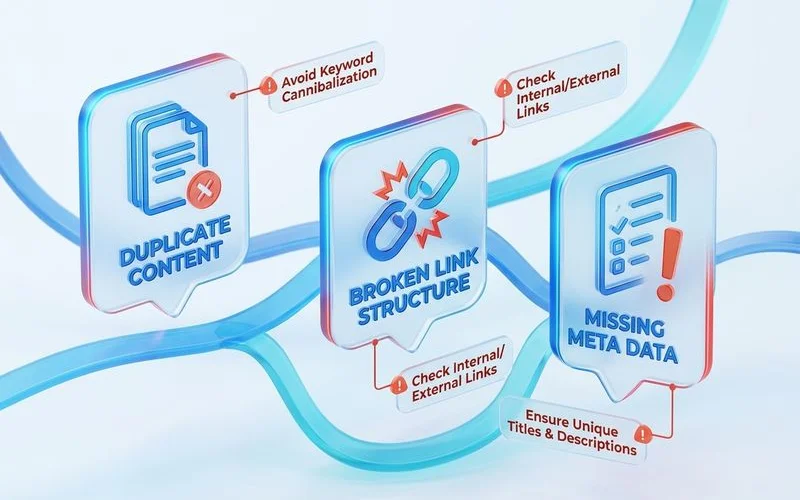
We watched the March 2026 core update prove that Google aggressively targets thin content. Sites publishing hundreds of AI-generated pages without editorial oversight saw massive traffic drops.
Our platform combats this by injecting highly specific data into every template. You must avoid generic AI output to succeed.
We rely on specific variable types to ensure each page provides unique value. A successful ai affiliate site builder uses these patterns consistently.
- Geographic Identifiers: Specific cities, neighborhoods, or postal codes.
- Numerical Metrics: Current pricing data, interest rates, or size dimensions.
- Feature Comparisons: Clear “Yes/No” data points for product differences.
- Proprietary Ratings: Internal scores or aggregated review data.
Internal-linking strategy across hundreds of pages
Our internal-linking strategy acts as the operational layer across hundreds of pages. The previous sections covered the reasoning, and this section covers the execution.
We found recent 2026 data showing that a proper internal linking mesh boosts indexation speed by roughly 2x. A disconnected page is essentially invisible to Googlebot.
Our recommended process follows a standardized pattern. The specific tooling depends on your stack, but the loop remains consistent.
We use four distinct steps to manage this flow. Following this order prevents orphaned pages.
- Identify the Input: Map out your parent category pages.
- Run the Process: Use automation to link child pages back to the parent.
- Validate the Output: Scan the site with tools like Screaming Frog to find broken paths.
- Iterate: Check Google Search Console to see which clusters need more link equity.
Additional considerations
We track several other critical factors as you work through this process. You must monitor your overall site architecture to avoid common penalties.
Our experience shows that thin pages, near-duplicates, and indexation throttling are the biggest pitfalls. The stakes are high in this industry.
We know that an affiliate marketing manager in Malaysia earns an average of RM129,815 per year. This figure reflects the massive revenue potential of a properly optimized site.
Affiliate site case shape with credit budget
Our team constantly evaluates the affiliate site case shape against your available credit budget. Generating thousands of pages requires careful API management.
We know a focused cluster of 50 high-quality pages performs better than 5,000 spammy ones. Credit allocation should target pages with the highest conversion probability.
Managing your crawl budget
Our monitoring tools show that Googlebot only assigns a limited crawl budget to new sites. Uploading 10,000 pages on day one often leads to indexation throttling.
We recommend a drip-feed approach. Publishing a few dozen pages daily builds trust signals gradually.
What to do next
We suggest putting this theory into practice immediately if this guide matched your situation. The natural next step is to test your own data sets.
Our platform is built specifically to handle the demands of 2026 search quality. You can structure the underlying feature around exactly the workflow described above.
We invite you to start scaling today. Take the next step with Bulk Article Generation.