
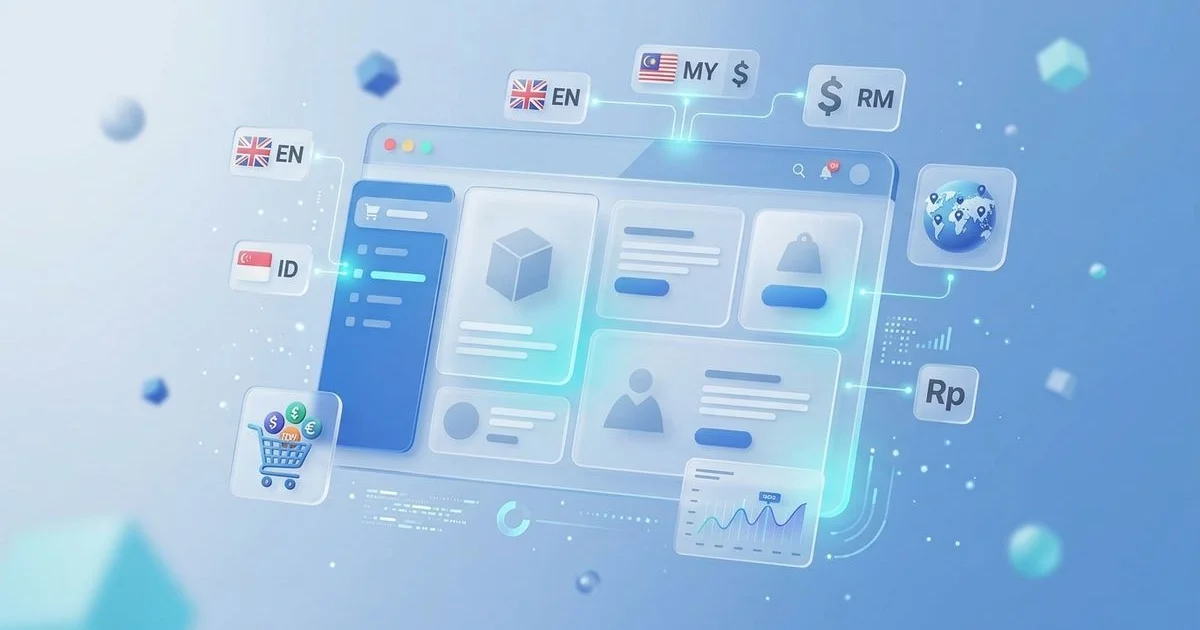
Managing hundreds of product listings usually becomes a massive bottleneck for growing e-commerce teams.
We at Agility Writer, backed by founder Adam Yong’s twenty years of SEO experience, see this manual data entry struggle constantly. An effective ai ecommerce product description strategy solves this scaling problem in 2026.
Our team recommends a specific workflow for putting this into practice across Southeast Asia. If you are new to this area, start with our AI Content Planning hub for the full feature overview first. Let’s look at the exact steps needed to automate your shopify ai content.
Product-description templates
Product-description templates form the starting point for creating an ai ecommerce product description system. A rigid, structured template acts as a safety net against AI hallucinations.
We always start our clients with a strict data hierarchy. Shopify Magic and similar native tools perform much better when fed organized bullet points instead of messy paragraphs.
Missing product attributes directly harm your visibility on regional platforms. Our research into Shopee’s Product AI Optimiser from late 2025 shows that listings with a 92% attribute completeness score receive 3.2 times more impressions. Fixing thousands of badly formatted entries later costs significant time and money.
Key Elements of a High-Converting Template
The practical version requires focusing on the concrete signal each step produces. We format every template to be highly readable on small screens. Market data from 2025 indicates smartphones captured 72.67% of the Malaysia e-commerce market share.
A strong template captures essential data before the AI generates any prose. Our data shows this structure works best:
- Core Specifications: Exact dimensions, weights, and materials.
- Localised Terminology: Familiar phrasing for the Malaysian market.
- Scannable Benefits: Bullet points answering common buyer questions immediately.
- Mobile-First Formatting: Short, concise text blocks.
Multi-locale output (SE-Asia marketplaces)
Multi-locale output across SE-Asia marketplaces matters because it dictates whether your regional workflow holds together. Treating this step as a strict quality gate prevents awkward literal translations from ruining your brand reputation.
We consider accurate localization the most critical factor for Malaysian sellers targeting a broader audience. Standard translation tools often fail to capture the cultural nuances of Bahasa Melayu or colloquial terms used on local platforms.
Our developers track the latest advancements in regional AI capabilities to solve this problem. Lazada recently integrated Alibaba’s Marco MT translation tool, which runs on their proprietary Qwen model. This specific AI interprets contextual clues and industry-specific terms much better than generic alternatives.
We recommend using platform-native translation tools when available to maintain cultural relevance.
Handling Translation Nuances
Different platforms offer varying levels of support for multi-locale listings. We map out these capabilities before launching a new product catalog.
Here is a comparison of how major platforms handle localized content:
| Platform | Translation Engine | Best Use Case |
|---|---|---|
| Lazada | Marco MT (Qwen Model) | Interpreting complex cultural contexts. |
| Shopee | ChatGPT Go Integration | Fast conversational Bahasa Melayu copy. |
| Shopify | Shopify Magic | Baseline English to local language drafts. |
Relying solely on one tool often leaves gaps in tone and accuracy. We always implement a manual review process for top-selling items. A quick native-speaker check verifies the AI output sounds natural to local buyers.
Bulk generation across SKU lists
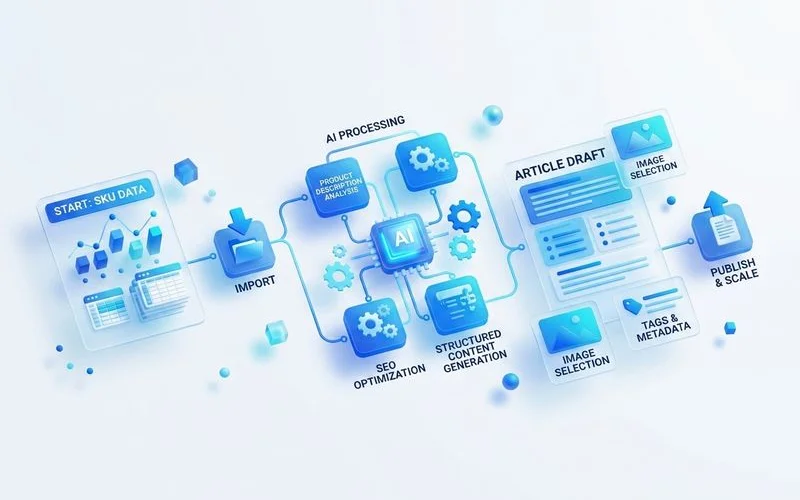
Bulk generation across SKU lists forms the operational layer of your content strategy. The standard pattern requires identifying the input data, running the AI process, validating the output, and then iterating on the prompt.
We run thousands of items through this exact loop every week. Specific tooling depends heavily on your existing e-commerce stack and regional focus.
Our preferred method involves connecting AI outputs directly to multi-channel management systems. Southeast Asian sellers frequently use platforms like BigSeller, a popular e-commerce ERP system. This tool handles the heavy lifting of syncing newly generated descriptions across Shopee, Lazada, and TikTok Shop simultaneously.
Managing High-Volume Updates
Generating copy for a large catalog introduces technical hurdles like API rate limits and formatting errors. We structure our bulk updates into smaller, manageable batches to maintain quality control.
Processing 50 to 100 SKUs at a time prevents the AI from losing context or generating repetitive text. Our quality assurance process catches errors before they go live on a storefront. You must monitor the output closely during the first few batches.
Here are common pitfalls to avoid during bulk generation:
- Ignoring Character Limits: Shopee and Lazada have strict title lengths that AI often exceeds.
- Losing HTML Formatting: Moving text from a spreadsheet to Shopify can strip out crucial paragraph tags.
- Repetitive Phrasing: The AI might use the exact same opening sentence for thirty different variations of a product.
- Missing Variables: Leaving placeholder text in the final published listing.
Additional considerations
Several other factors are worth surfacing as you finalize your shopify ai content workflow. Product schema injection and the hand-off to your CMS require careful technical planning.
We prioritize structured data because it directly impacts your organic search visibility. Search engines rely on JSON-LD schema markup to understand product prices, availability, and review ratings.
Our development process automatically weaves this schema code into the final AI output. Failing to include this code means missing out on rich snippets in Google search results.
Streamlining the CMS Handoff
The final step involves pushing the approved content into your active storefront. We use direct API integrations to move data safely into WordPress or Shopify environments.
Manual copy-pasting introduces human error and destroys formatting quickly. Shopify’s native tools allow for easy importing via CSV files if you lack a direct API connection.
- Format Check: Verify all paragraph and list tags remain intact during the transfer.
- Image Sync: Confirm that the primary product images match the newly generated text descriptions.
- Status Update: Upload new listings as Draft status first to allow a final visual inspection.
What to do next
If this guide matched your situation, the natural next step is to put these concepts into practice. We have structured the underlying features of our platform around the exact workflow described above.
Putting an ai product description bulk strategy into action requires the right foundational plan. Start by testing a small batch of ten products to refine your prompting and formatting.
Our AI Content Planning hub provides the complete feature overview you need to begin.
Explore that resource today to start automating your catalog with confidence.